

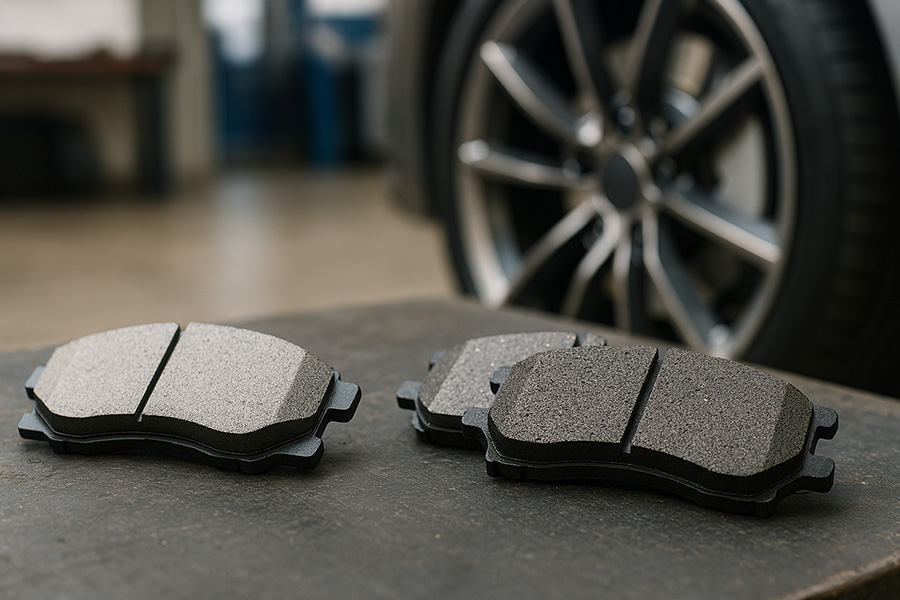
Choosing the right brake pads is crucial for safety, comfort, and vehicle maintenance. Most modern cars use three main types of brake pads: organic, ceramic, and semi-metallic. While high-performance motorsport vehicles sometimes use carbon-ceramic pads, their high cost makes them impractical for everyday driving.
For the average driver, the real choice is usually between ceramic and semi-metallic brake pads. Both have clear advantages but are designed for different driving styles and conditions.
Key Differences Between Ceramic and Semi-Metallic Pads
Semi-metallic pads are usually more affordable and excel under high-stress conditions, such as heavy braking, sporty driving, or towing. Thanks to their metallic composition, they dissipate heat better, reducing the risk of brake fade in extreme situations.
On the other hand, ceramic pads are known for being quieter, producing less brake dust, and offering a smoother driving experience. They also tend to have longer durability under normal conditions, making them a popular choice for drivers who prioritize comfort and cleaner wheels.
Which Pads Fit Your Lifestyle?
If you want cleaner wheels, less braking noise, and a comfortable driving experience on city streets or highways, ceramic pads are the best choice. If you drive in extreme climates, tow heavy loads, carry weight frequently, or want to save money, semi-metallic pads provide more robust performance.
These differences are especially important when evaluating a car before purchase. If you’re comparing new or used models, it’s wise to check the brake system condition on vehicle buying and selling platforms like the marketplace for new and used cars, where you’ll find options suited to different needs and budgets.
Brake Feel and Climate Considerations
The brake pedal feel also varies depending on the pad type. Ceramic pads, made with ceramic fibers and other compounds, compress less, offering a more linear and consistent response. Semi-metallic pads, with heavier metal particles, also feel firm but perform especially well in larger vehicles like SUVs, trucks, and vans, maintaining braking performance under load.
Climate is another critical factor. In cold regions, semi-metallic pads often perform better right away, as they don’t require heat to be effective. Ceramics, on the other hand, work best in temperate climates and steady driving conditions, such as on highways.
Longevity, Wear, and Maintenance
In terms of wear, ceramic pads generally last longer under normal conditions. A 2021 study published in Problems of Tribology found that at moderate speeds, ceramics showed up to 47% less wear than semi-metallic pads. However, under high-speed or heavy braking, semi-metallic pads demonstrated greater durability.
Both types can affect rotor wear: ceramics may crack if not installed correctly, while semi-metallic pads, being more abrasive, can wear rotors faster and produce more dust. Regardless, it’s essential not to overload the vehicle, as extra weight accelerates brake system wear.
Experts recommend replacing pads when their thickness drops below three millimeters, or sooner if you notice signs such as squealing, longer stopping distances, or pedal vibrations.
In conclusion, there is no perfect brake pad for every driver. The ideal choice depends on your vehicle, driving habits, and what you value most: comfort, performance, or cost. Carefully considering these factors will help keep your car safe and in optimal condition for longer.