

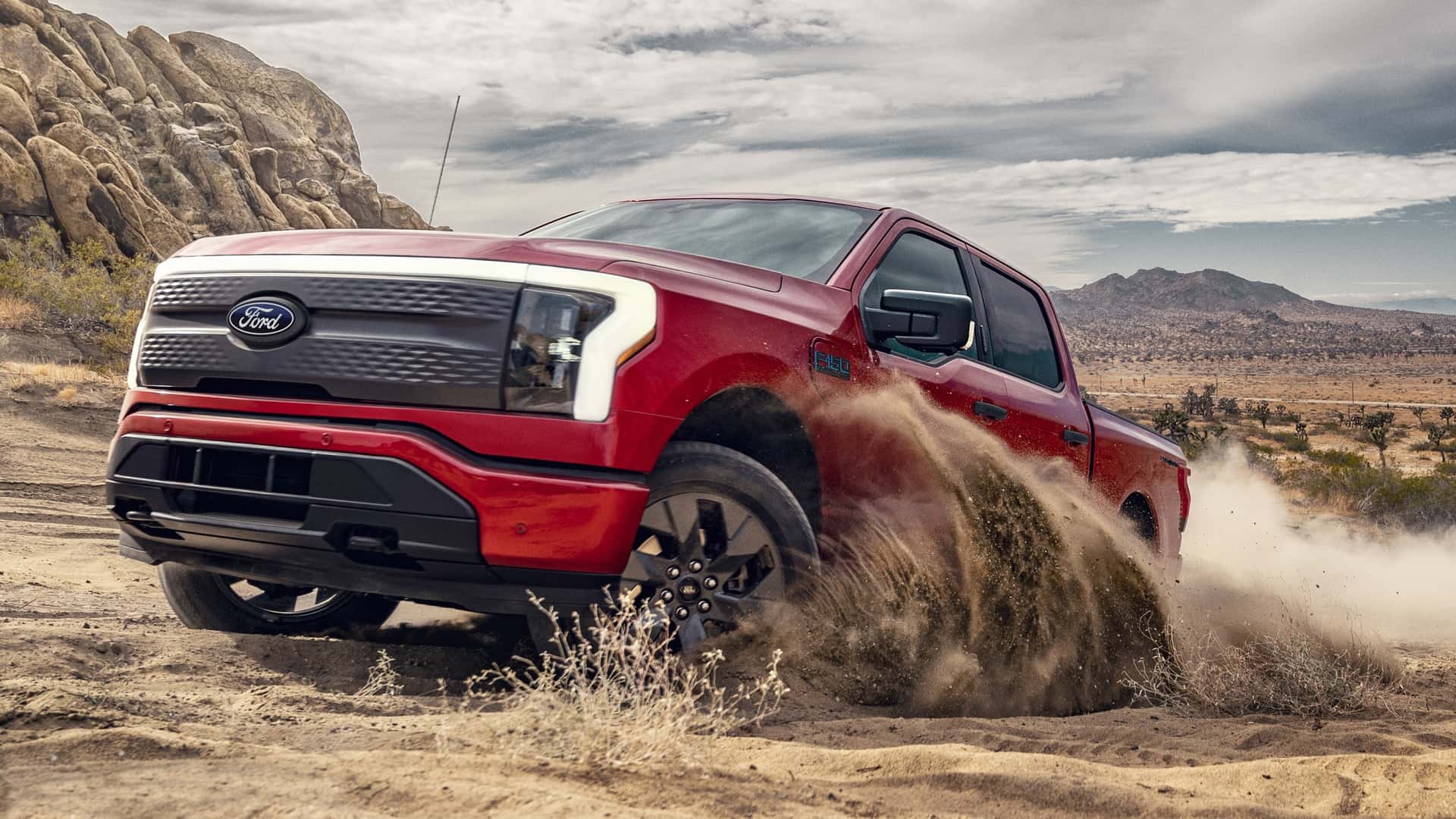
Ford has taken an unexpected turn in its electrification strategy. The Ford F-150 Lightning, one of its most ambitious electric projects, has been canceled, along with its supposed fully electric successor, internally known as the T3 project. Meanwhile, Chinese electric and plug-in hybrid vehicles continue to gain ground globally, especially in more affordable segments. The only clear hope for Ford in this area now seems to be its Universal EV platform, scheduled—at least on paper—for 2027.
The situation is even more striking considering that the F-150 Lightning will return with a gasoline engine, and that Ford has decided to cancel a U.S.-built commercial electric truck in favor of hybrid and combustion-engine versions. In addition, former battery plants are being repurposed into artificial intelligence data centers, diluting the message of a fully electric future.
A step backward in the middle of the electric race
This move is particularly concerning coming from Ford Motor Company, whose own CEO, Jim Farley, has repeatedly warned about China’s unstoppable advance in the electric car sector. Yet when the situation becomes challenging, the response seems to be the same as always: a return to the internal combustion engine.
It is true that Ford’s Model E electric program has resulted in massive financial losses. Ford acknowledges nearly $19 billion in losses, partly due to high development and production costs. Although the Lightning has been one of the best-selling electric pickups, actual sales have fallen well short of initial projections, and it never reached the promised base price of $40,000. Even at higher base prices, the model continued to lose money.
This situation recalls another controversial decision by the brand: the complete elimination of sedans and compact cars from its lineup. At the time, it seemed like a strategic move, but today Japanese and Korean manufacturers dominate those segments, while affordable Chinese EVs are beginning to occupy the space Ford left behind.
For those closely following market trends and looking for real alternatives, vehicle buying and selling platforms such as the marketplace for electric cars, hybrids, and pickups on yacarros.com
make it possible to see how the global offering is becoming increasingly diverse, with proposals that Ford appears to be letting slip away.
China advances, Ford retreats
As Ford pulls back, Chinese brands such as BYD, Zeekr, and Xpeng are moving forward rapidly, combining electric vehicles, hybrids, and PHEVs to adapt to different types of customers. A recent example is the BYD Atto 2 PHEV, launched in Europe for those not yet ready to go fully electric.
In contrast, Ford has canceled key projects such as the three-row electric SUV and has placed nearly all its bets on its future Universal EV architecture. On paper, it sounds promising: affordable new EVs, including a truck priced around $30,000. But for now, there are no concrete models in dealerships, raising fears that these plans may remain mere promises.
The contradiction is clear: Farley has publicly praised models like the Xiaomi SU7, a symbol of China’s success in electric mobility, yet Ford seems unable to replicate that innovation at home. Meanwhile, its main rival, General Motors, has already put a broader electric lineup on the road, with a clearer path toward profitability.
An uncertain future
Demand for EVs has been weaker than expected, yes, but that does not mean there is no demand at all. A return to gasoline and diesel amid political and technological debate raises questions about Ford’s true direction. Even iconic models such as the Mustang Mach-E could be at risk if sales fail to gain momentum.
Everything suggests that Ford is staking much of its credibility on the future Universal EV platform. However, until real products hit the streets, skepticism will continue to grow. At this pace, it would not be surprising if the brand once again turns to Power Stroke diesel engines in the name of “customer choice.”