

For years, the used car market has been a stable sector, but never the main focus. However, the global situation of recent times— inflation, microchip shortages, rising prices of new cars, and major shifts in mobility— has triggered a transformation that has turned pre-owned vehicles into the true center of the automotive market.
Data shows a clear trend: 2025 will be a decisive year for buying used cars. Not only because of the wide range of available inventory, but also because the sector has matured, gone digital, and now offers buyers a level of safety and transparency that would have been unthinkable just a few years ago.
This article analyzes the reasons behind the revival of the market, the factors driving demand, the new advantages for buyers, and why this may be the best time to purchase a pre-owned vehicle.
A new-car market that is increasingly inaccessible
New vehicle prices have reached record highs. In some countries, the cumulative increase since 2020 exceeds 30%. This rise comes from several factors:
– Increased production costs.
– Higher prices for materials such as steel, aluminum, and plastics.
– Implementation of new mandatory technologies (ADAS, safety systems, connectivity).
– The transition toward hybrid and electric models, which carry higher production costs.
As a result, many buyers have been priced out of the new-car market. The most accessible option—without sacrificing quality—has been to turn to the used segment.
The supply of used vehicles has never been larger
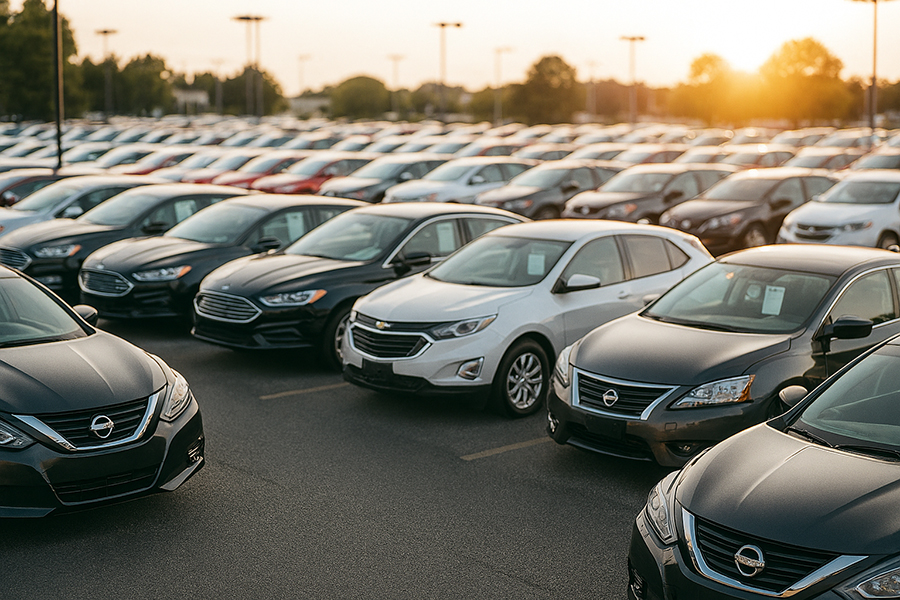
The renewal of vehicle fleets is generating a massive influx of late-model used cars with low mileage and equipment levels that previously belonged only to premium ranges.
Among the causes:
– Urban policies that restrict circulation of older vehicles.
– Drivers switching to hybrids or electric cars.
– Companies renewing their fleets more frequently.
– Leasing and rental contracts returning vehicles to the market after 2 to 4 years.
The result is a market full of modern, efficient, well-maintained cars. It is an ideal scenario for anyone seeking a reliable vehicle without the cost of a new one.
Digital maturity: a safer, more transparent market
One of the most profound shifts has been the digitalization of the second-hand market. What once required visiting dealerships, meeting private sellers, and relying on superficial inspections has now become a far safer process.
Specialized platforms allow buyers to:
– Compare hundreds of models in seconds.
– View real photos and detailed condition reports.
– Contact verified sellers.
– Access vehicle history, mileage, year, and documentation.
– Apply advanced filters by brand, fuel type, price, condition, or location.
This transparency has eliminated many of the doubts that often surrounded buying a used car. Buyers no longer “take a chance”—they make informed decisions.
Mechanical reliability has completely changed
During the 1990s and early 2000s, buying a used car almost always meant dealing with repairs within the first few months. Today, the reality is different.
Modern cars:
– Last longer.
– Have more efficient and more reliable engines.
– Use more durable materials.
– Require maintenance less frequently.
– Retain their value better over time.
A car that is five or six years old can still offer a long useful lifespan, as long as it has received proper maintenance. This is why more and more buyers see the used segment as a smart and logical option.
Inflation has changed how people buy
Economic conditions are pushing buyers to make more rational decisions. The question is no longer “Which car do I want?” but “Which car does my budget need?”
Thus, the used market offers:
– Lower prices.
– Less depreciation.
– Lower upfront costs.
– Greater room for negotiation.
– A wide range of options that make it easier to find a model within budget.
At a time when every dollar matters, buying a used car becomes a financial strategy rather than a second-choice alternative.
Mobility trends are boosting demand for used cars
Cities are redefining mobility with low-emission zones, restrictions on older cars, promotion of shared mobility, and stricter environmental regulations.
But paradoxically, this has not harmed the used market. On the contrary:
– Demand is rising for transitional vehicles (efficient gasoline cars, hybrids, recent diesel models).
– Affordable daily-use models are increasingly in demand.
– Compact city cars are gaining value.
– Mobility outside major cities still depends heavily on private vehicles.
In this context, a well-maintained used car offers freedom, practicality, and savings.
The value-for-money ratio has never been better
Comparisons between new and used cars show a very clear difference: in most cases, a three- or four-year-old vehicle offers 80% of the performance of a new one at 40% or 50% of the price.
In 2025, this gap will widen due to:
– Limited discounts on new vehicles.
– Increased pressure toward electrification (raising vehicle costs).
– Higher VAT, environmental taxes, and logistics costs.
This makes the used segment the natural winner of the year.
What buyers should keep in mind for 2025
To make the most of this moment, it is important to follow some essential recommendations:
Compare models and prices before deciding.
Check the vehicle’s history.
Verify mileage, year, and actual condition.
Analyze fuel consumption, maintenance costs, and availability of spare parts.
Consider model and brand reliability.
Information is power, and in 2025 it will be more accessible than ever to buyers.