


Safety in automobiles has been a constant concern since the first motor vehicles. From the development of the three-point seatbelt in 1959 to modern regulations, technological advancements have saved millions of lives. In the United States, the FMVSS 208 standard, which came into effect in 1968, required all new vehicles to have front seatbelts. This historic regulation continues to influence the industry, as evidenced by the recent withdrawal of the Volkswagen ID Buzz due to safety concerns.
However, seatbelts are not the only factor that makes a difference. Another crucial element that protects occupants is automotive glass, whose evolution has been fundamental in reducing injuries in traffic accidents.
Laminated Glass: The First Line of Defense
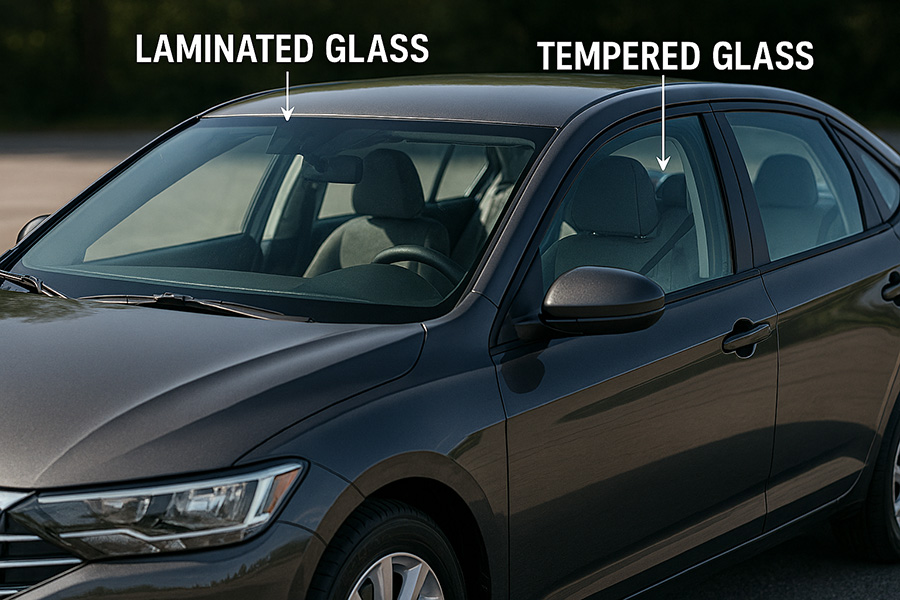
The front windshield is made of laminated glass, composed of three layers: an outer layer of glass, an intermediate layer of polyvinyl butyral (PVB) plastic, and an inner layer of glass. This combination prevents the windshield from shattering into dangerous fragments during an impact, protecting occupants from serious injuries.
The concept of laminated glass is not new: it was developed by the French chemist Edouard Benedictus in 1906, who discovered that glass coated with cellulose nitrate remained intact when broken. Thanks to this advancement, approximately a decade later, automobiles began incorporating laminated windshields, marking the start of a revolution in vehicle safety.
Laminated glass not only prevents fragments from falling inside, but also serves structural functions: it helps support the roof in case of a rollover and prevents occupants from being ejected through the windshield, a phenomenon once known as “wearing a glass necklace.” According to the U.S. National Highway Traffic Safety Administration, around 700 people each year would have died from being thrown through the windshield if these measures had not been implemented.
Tempered Glass: Strength and Safety in Every Window
Unlike laminated glass, side and rear windows are usually made of tempered glass, designed to break into small rounded fragments in the event of an accident, reducing the likelihood of severe cuts. This glass is heated to over 1,100 °C and rapidly cooled, increasing its compression strength.
Tempered glass offers additional advantages: it is more resistant to temperature changes, making it less likely to crack when exposed to sunlight or sudden drops in temperature. Its versatility also allows it to be used in multiple applications, from car windows to smartphone screen protectors and shower doors.
How These Advances Affect Vehicle Purchases
Understanding the features of automotive glass and safety standards is key when buying or selling a car. Modern vehicles offer combinations of laminated and tempered glass that ensure protection and durability, enhancing the safety of all occupants.
If you are looking for a car that meets the highest safety standards, you can explore a wide variety of options on YaCarros, the vehicle buying and selling portal, where you will find detailed information about cars with advanced safety features and certified glass.