


The automotive world has always been fertile ground for mechanical innovation. Engines come in all imaginable sizes and configurations: from the imposing 8.0-liter W16 of the Bugatti Veyron to compact three-cylinder blocks capable of delivering surprising performance. However, among the less common configurations, one stands out in particular: the five-cylinder engine, a technical solution that today survives almost as a cult classic.
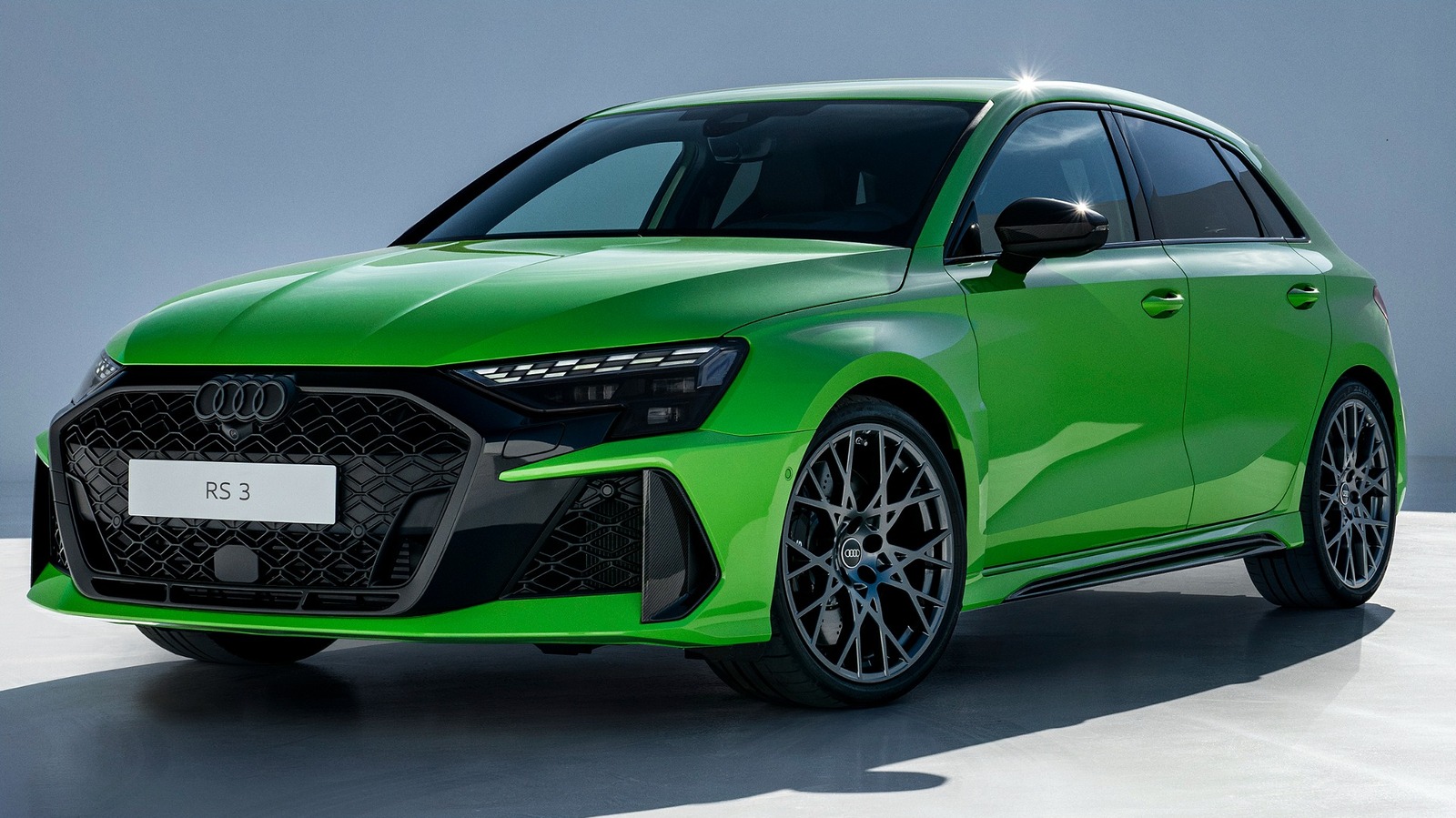
Although most modern vehicles rely on four-, six-, or eight-cylinder engines, some manufacturers dared in the past to explore alternatives. One of the few contemporary examples is the 2026 Audi RS 3, which keeps this architecture alive with its 2.5-liter five-cylinder engine, highly valued by enthusiasts.
The origin of the five-cylinder engine
In the 1970s, brands such as Mercedes-Benz sought to increase the power of their four-cylinder engines without resorting to six-cylinder blocks, which involved more weight and higher fuel consumption. The intermediate solution was to add an extra cylinder, reusing many existing components and achieving an interesting balance between performance and efficiency.
Although the idea worked on paper, in practice several technical drawbacks emerged that limited its widespread adoption. One of the main issues was its mechanical complexity, especially when combined with carburetor systems.
Five-cylinder engines and carburetors: a complicated combination
For an engine to function properly, it needs a precise mixture of air and fuel. Today, electronic fuel injection handles this task with great accuracy, assigning one injector per cylinder and optimizing combustion through advanced sensors.
However, before the 1990s, carburetors were the norm. These purely mechanical systems struggled to distribute the mixture evenly in engines with an odd number of cylinders. In a five-cylinder engine, it was difficult to ensure that all cylinders received the same amount of fuel, which negatively affected performance and reliability. Solutions did exist, but they required such complex engineering that they outweighed the initial benefits.
Turbocharging changed the rules of the game
Forced induction as an efficient alternative
The arrival and evolution of the turbocharger ultimately pushed the five-cylinder engine into the background. Although turbo technology has existed for more than a century, it was not until the late 1970s that it began to gain popularity in passenger cars. Since then, the technology has advanced enormously, offering greater durability, thermal efficiency, and power.
Thanks to forced induction, a turbocharged four-cylinder engine can deliver power increases of up to 40%, while maintaining lower weight and improved fuel efficiency. This made the five-cylinder proposition less attractive compared to simpler, more cost-effective options.
Even so, iconic models like the Audi RS 3 show that this configuration still has a place in the market, especially among those seeking unique driving sensations and an unmistakable sound. If you’re interested in exploring these types of vehicles or learning about other available options, you can check out the market for sports and high-performance cars on specialized vehicle buying and selling platforms, where it’s possible to find models with uncommon mechanical configurations.
Ultimately, five-cylinder engines did not disappear due to a lack of character, but because technological evolution offered more efficient and versatile alternatives. Even so, they remain a mechanical gem for true automotive enthusiasts.