

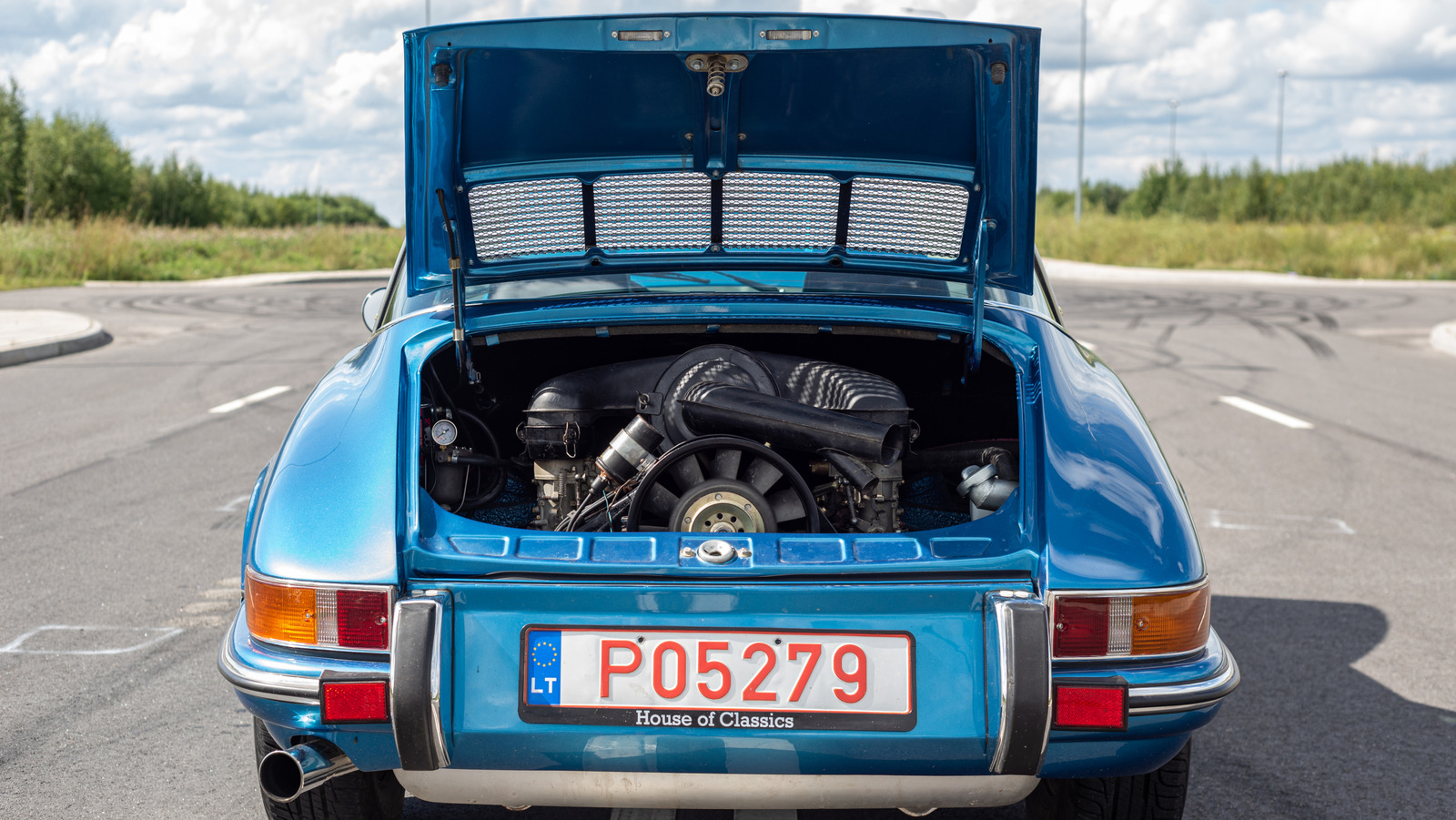
For decades, one of the most intense debates among Porsche enthusiasts has been determining which version of the Porsche 911 is superior: the air-cooled or the water-cooled. The iconic German manufacturer relied on air-cooled engines for more than 30 years, making them an essential part of the 911’s DNA. However, in 1997 Porsche decided to break with tradition and embrace a new technological era that was not without controversy.
The decision was no coincidence. Air-cooled engines offered a visceral driving experience, a distinctive sound, and relatively simple mechanics that made maintenance easier. Even so, changes in the industry forced the brand to evolve.
Why did Porsche switch to water cooling?
One of the main reasons was the strict emissions regulations that began to be implemented worldwide in the 1990s. Air-cooled engines take longer to reach optimal operating temperature and have greater difficulty regulating heat precisely. In contrast, water-cooled engines allow for better thermal control, resulting in lower pollutant emissions.
In addition, Porsche needed to respond to a growing demand for more power and better performance. More power means more heat generation, especially in turbocharged engines, where liquid cooling is far more efficient. Noise regulations also played a role, as water-cooled engines are generally quieter.
The result of this shift was the Porsche 996, the first 911 with water cooling, which not only improved efficiency and reduced emissions compared to the 993, but also allowed the brand to reduce costs by sharing components with other models such as the Boxster.
If you are passionate about classic and modern sports cars, today it is possible to find true 911 gems on specialized sports car buying and selling platforms, where historic models coexist alongside more recent versions.
The last air-cooled Porsche 911: the legendary 993
The Porsche 993 was the last 911 to feature an air-cooled engine and, for many, the best ever built under this configuration. Launched in 1993, it represented the pinnacle of the six-cylinder boxer engine with 3.6 liters, incorporating significant technical improvements: a stiffer crankshaft, lighter pistons and connecting rods, optimized valves, and larger intake ports.
This model was groundbreaking in several ways. It was the first 911 with a six-speed manual transmission and also the first to feature twin turbochargers, delivering smooth yet forceful power. With 402 horsepower, the 993 could accelerate from 0 to 100 km/h in just 4.5 seconds—impressive figures for its time.
But the 993 stood out for more than just its engine. Porsche refined its LSA chassis (Light, Stable, Agile), introducing a multi-link rear suspension that significantly improved stability and handling. Visually, it evolved from the 964 with slightly more oval headlights, wider rear arches, and a more aerodynamic and fluid body shape.
The 993 marked a perfect conclusion to the era of the air-cooled Porsche. Although it belongs to a bygone era, its legacy remains very much alive, both among collectors and thanks to prestigious restomod firms such as Singer and RUF, which continue to reinterpret this sports car icon.