

The Dominican Republic’s vehicle import market could face tighter origin verification requirements as the Association of Vehicle Manufacturers and Dealers (ACOFAVE) calls on the country’s customs authorities to reinforce controls over vehicles claiming preferential tariff treatment under the Dominican Republic-Central America-United States Free Trade Agreement (DR-CAFTA).
The association argues that establishing a vehicle’s country of origin requires more than checking its Vehicle Identification Number (VIN). Additional documentation is necessary to demonstrate compliance with the trade agreement’s rules of origin, particularly for used vehicles whose manufacturing and ownership records may be difficult to obtain.
Why Vehicle Origin Verification Matters
ACOFAVE points to the regional content requirements established under DR-CAFTA, including a 35% minimum threshold under the applicable calculation method for qualifying vehicles. Meeting these requirements is essential for vehicles seeking preferential tariff treatment.
However, a VIN primarily identifies a vehicle and provides information about its manufacturing history. According to the association, it cannot independently establish that a vehicle satisfies all the requirements necessary to qualify as originating under the agreement.
The issue is particularly relevant to used vehicles purchased through auctions or third-party intermediaries in the United States. Importers may have limited access to manufacturer records, production documentation and other information needed to demonstrate compliance with the applicable origin requirements.
ACOFAVE Proposes Additional Customs Verification Measures
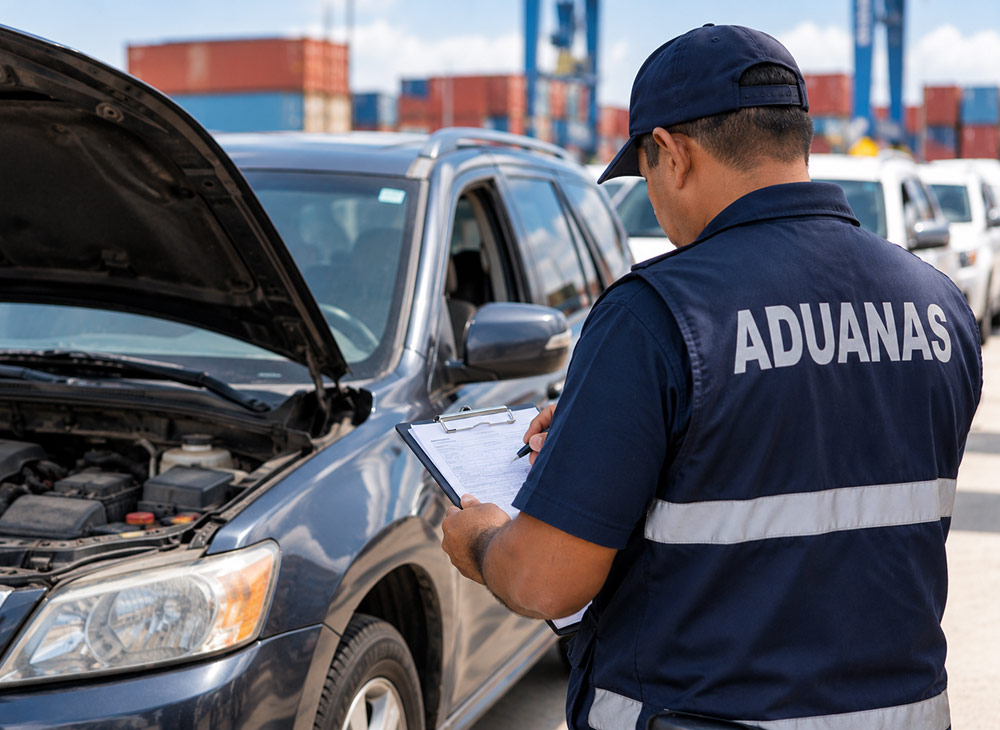
To address these challenges, ACOFAVE is calling on the General Directorate of Customs (DGA), the Dominican Republic’s national customs authority, to make full use of the verification mechanisms available under DR-CAFTA.
The association identifies several tools that could help establish a more consistent standard of proof for imported vehicles:
Manufacturer documentation: Records and certificates issued by vehicle manufacturers to establish relevant production and origin information.
Information exchange with U.S. authorities: Greater cooperation with American customs authorities to obtain information that can support the verification process.
Vehicle title history reports: Documentation from the country of origin that provides additional information about a vehicle’s ownership and recorded history.
ACOFAVE maintains that these mechanisms should be implemented through technical criteria and consistent procedures, without creating unnecessary obstacles for legitimate vehicle imports.
Potential Impact on the Dominican Automotive Market
The debate extends beyond customs documentation. How authorities verify vehicle origin can affect import costs, market competition and the conditions under which dealers operate in the Dominican Republic.
According to ACOFAVE, applying consistent requirements to both new and used vehicle importers would help prevent businesses from receiving preferential tariff treatment without adequately demonstrating eligibility.
The association also links stronger documentation controls to government revenue protection and consumer safety. More complete vehicle records can provide useful information about a vehicle’s background, while more consistent customs procedures can help improve transparency across the import market.
For consumers, the issue is particularly relevant when purchasing used imported vehicles, where access to reliable historical information can influence purchasing decisions and help identify potential concerns about a vehicle’s past.
DR-CAFTA Compliance Remains Central to the Debate
ACOFAVE’s position emphasizes that preferential tariff treatment should be available only to vehicles that satisfy the applicable rules of origin established by the trade agreement.
The association has reiterated its willingness to work with the DGA and other relevant authorities to develop verification procedures that balance effective customs oversight with the need to maintain legitimate international trade.
The broader objective, according to ACOFAVE, is to establish a more transparent and reliable vehicle import system in the Dominican Republic, ensuring that customs benefits are applied according to the requirements of DR-CAFTA while supporting fair competition and protecting consumers.