

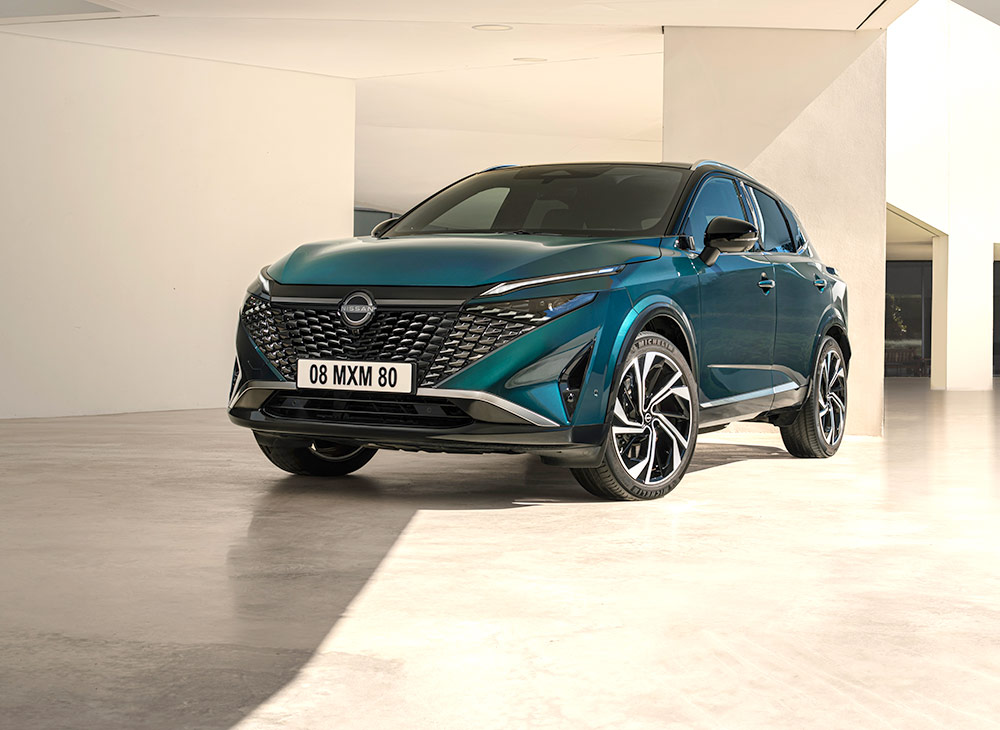
Nissan has taken its electrification technology to a new global milestone. The new-generation Nissan Qashqai e-POWER has driven 1,980 kilometers on a single tank of fuel, earning a Guinness World Records title for the longest distance driven by an extended-range electric SUV without external recharging or refueling.
The record attempt took place in Colombia between July 14 and 17, 2026, with the SUV traveling from Bogotá to the Caribbean coast. The route combined high-altitude driving, urban traffic, open highways and changing weather conditions, putting the e-POWER system’s efficiency and range to the test under real-world conditions.
A 1,980-kilometer journey across Colombia
The journey was monitored throughout by Guinness World Records™ judges, who verified the conditions of the challenge before certifying the final result. The distance makes the Qashqai e-POWER the latest Nissan model to demonstrate the potential of its extended-range electrification technology in a demanding long-distance drive.
For Nissan, the achievement is also part of a broader effort to demonstrate how e-POWER performs in different environments. The company has previously conducted long-distance challenges involving the technology in markets including the United Kingdom and Tasmania.
The record could be particularly relevant in markets where electric-vehicle charging infrastructure is still developing. For consumers comparing different powertrain options before buying a vehicle, understanding the differences between fully electric, hybrid and extended-range systems can be important. Buyers can also explore vehicles available in the Dominican Republic when comparing different mobility options.
How does Nissan e-POWER work?
The e-POWER system works differently from a conventional hybrid. The vehicle’s wheels are driven exclusively by an electric motor, while the gasoline engine functions as a generator, producing electricity when required.
This configuration gives drivers an experience similar to that of an electric vehicle, including smooth power delivery and immediate response, while avoiding the need to connect the vehicle to an external charger to replenish its energy.
The latest generation of the system features a modular 5-in-1 architecture that integrates components including the electric motor, generator, inverter, reducer and increaser into a compact system. It also uses regenerative braking to recover energy during deceleration and improve overall efficiency.
Electric driving without relying on charging stations
One of the defining characteristics of e-POWER is its combination of electric propulsion and onboard power generation. The vehicle maintains the driving characteristics of an electrically powered car, while the gasoline engine provides electricity without requiring the driver to stop at a charging station.
That approach could appeal to drivers who want some of the benefits associated with electric mobility while retaining the flexibility offered by a conventional fuel network.
Richard Candler, a Nissan corporate executive, said the record demonstrates the capabilities of the latest generation of e-POWER, highlighting its combination of efficiency, refinement and an EV-like driving experience.
Another milestone for Nissan’s electrification strategy
The Colombian record comes as Nissan continues expanding e-POWER across international markets. The technology is designed to provide an electrified driving experience without requiring drivers to completely change their existing vehicle-use habits.
Covering 1,980 kilometers on a single tank represents more than a record distance. It also demonstrates the potential of combining electric propulsion with an onboard electricity-generation system for long-distance driving.
For Nissan, the objective is to continue developing technologies that improve efficiency while reducing some of the barriers associated with the transition to electrified transportation as markets move toward wider adoption of electric vehicles.