

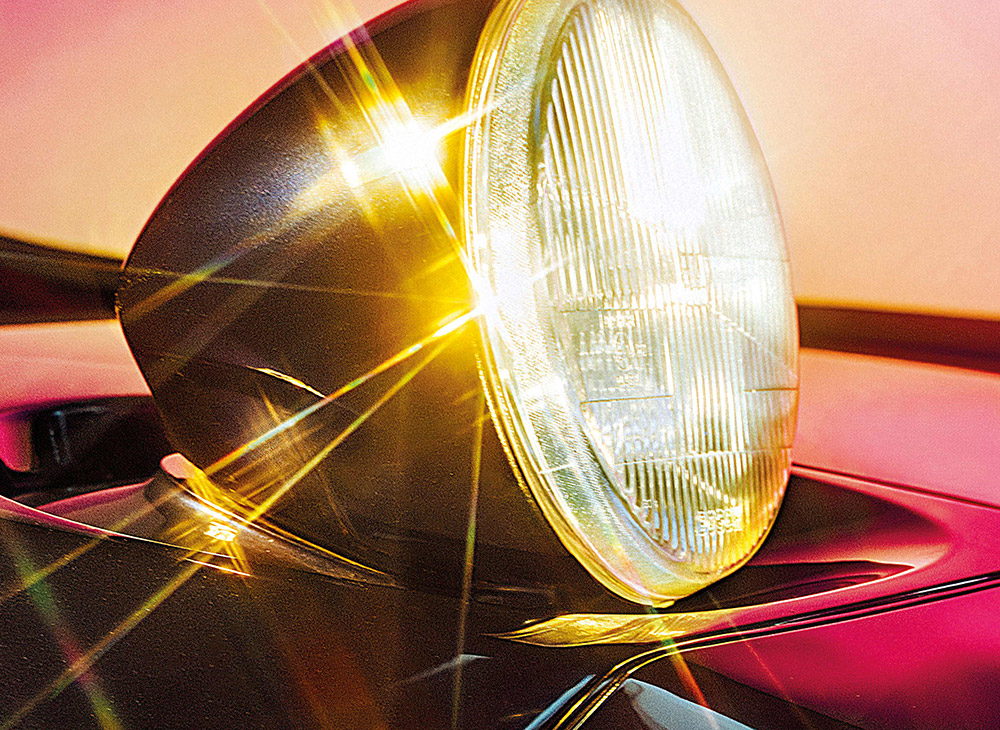
The pop-up headlights of the Porsche 928 remain one of the most iconic design features in automotive history. More than just a lighting system, they represented the perfect blend of engineering, design, and personality, becoming one of the defining characteristics of sports cars from that era.
For many enthusiasts, simply turning the headlight switch was enough to enjoy an unforgettable mechanical display as the headlights slowly rose from the hood before lighting up the road ahead. It is a simple gesture that still evokes nostalgia among classic car lovers today.
The Porsche 928 redefined the grand touring concept
Unveiled at the 1977 Geneva Motor Show, the Porsche 928 marked a major milestone for the German automaker as its first grand touring model powered by a front-mounted V8 engine.
Its innovative transaxle layout, which positioned the transmission at the rear axle to achieve near-perfect weight distribution, delivered an exceptional balance of performance, comfort, and handling. The result was a luxury grand tourer that redefined the segment.
One of its most recognizable features was its sleek, aerodynamic front end. When the driver activated the lighting system, the headlights rose and rotated forward, completely transforming the car’s appearance and giving it an unmistakable identity.
A signature design that defined an entire generation
Throughout the 1970s and 1980s, pop-up headlights became a popular feature among many automotive manufacturers. Porsche, however, developed its own distinctive approach within its transaxle lineup.
While models such as the Porsche 924 and later the 944 completely concealed their headlights beneath body-colored panels, the 928 adopted a far more distinctive solution. Its headlights remained partially visible even when closed, making the car instantly recognizable by its silhouette alone.
Years later, the Porsche 968, introduced in 1991, revived that design philosophy, reinforcing a styling cue that remains one of the most memorable in Porsche’s history.
Collectors and enthusiasts looking for modern or classic Porsche models, as well as other performance vehicles, can browse a selection of Porsche cars and sports vehicles for sale, featuring a wide variety of options for automotive enthusiasts.
Design driven by technology
Renowned Dutch designer Harm Lagaay, who later became Porsche’s Head of Design, explained that these headlights were adopted for both aesthetic and technical reasons.
At the time, lighting technology required relatively large headlamp units to provide adequate nighttime visibility. Pop-up headlights allowed Porsche to maintain a low, aerodynamic front profile without sacrificing excellent illumination.
According to Lagaay, the Porsche 928 stood out for its outstanding nighttime visibility thanks to its large headlight assemblies—an important advantage for a grand tourer designed to cover long distances comfortably.
The end of the pop-up headlight era
Advances in lighting technology eventually brought this distinctive design feature to an end. With the arrival of the Porsche Boxster in 1996 and the 911 (996) a year later, Porsche officially phased out its pop-up headlight mechanisms.
Modern lighting systems made it possible to integrate all lighting functions into more compact, lighter, and more efficient assemblies, improving both aerodynamics and reliability.
Even so, pop-up headlights continue to hold a special place in the hearts of automotive enthusiasts. In the Porsche 928, every activation of the lighting system created a small mechanical performance that reflected an era when cars were designed not only to be faster and more efficient, but also to stir emotion behind the wheel.
Today, decades after its debut, the Porsche 928 remains one of the true icons of automotive history, and its distinctive pop-up headlights continue to symbolize an unforgettable chapter in automotive design and engineering.